|
|
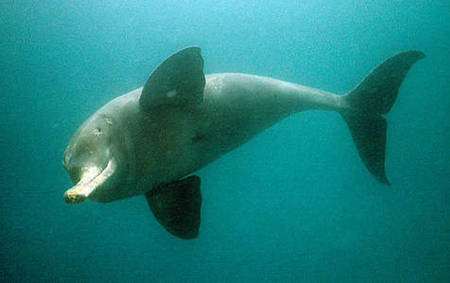
The Ganges River DolphinThe Ganges river Dolphin is an incredibly interesting animal to study. Amazingly this creature is pretty much blind but it still manages to survive in the worlds most populated area and in the worlds most polluted river.
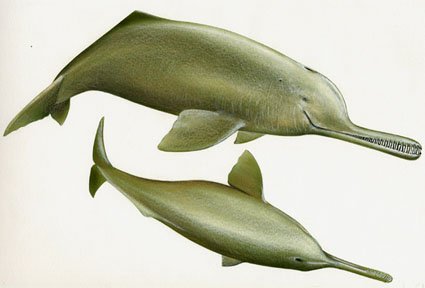
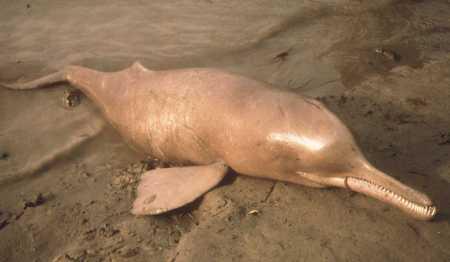
AppearanceOften confused with the India river dolphin which is almost identical in appearance, the Ganges dolphin has a long pointed nose, short, square flat disks. It's body is brownish greyish colour. It has relatively small flippers and fins in relation to it's body. As an average a male dolphin in the Ganges can grow up to 2.5 meters in length while a female can reaches up to 2.7 meters. Pregnancy lasts about 10 months and they usually live for about 20 years although the oldest ever recorded was 28.
Interaction with HumansThe Ganges Dolphins have recently been very badly affected by humans. Some of the most common problems that occur are: Entanglement in fishing nets which has caused a huge fall in the numbers of dolphins. They are often killed for use of their oil and meat.
Irrigation has lowered water levels throughout their habitat again causing dramatic reductions in local population numbers. Another of the problems is the near 50 dams that have caused the segregation of pods causing inbreeding and a narrowed gene pool. |