FOOD IN INDIA
|
The food in India is just as diverse as its people and cultures. When you're travelling in India you start to get the impression that it's not just one big country. It seems almost like it's made up of thousands of individual countries each with its own traditions, culture but most noticeably, flavour! Scroll down for complete information on everything about Indian food INDIAN CUISINE |
The sometimes overwhelming aroma of India is the light scent of roses and lavender flowing on the warm air mixing with the heavy fragrance of spices coming from every home. Oils and spices are a vital part of pretty much every aspect of Indian food and are used to enhance the taste of a dish. Exact blending methods and combinations of flavours have been passed down through families for thousands of years so you're unlikely to eat two meals that are the same. The English word 'curry' translates to Hindi as 'Kari' which basically means 'spice sauce'.
Indian cuisine has many depths to it and each unique dish can be identified by different cooking techniques, by its region and by its chef. India's various religions and cultures have played a major part in modern day Indian food. For nearly two millenia, mass immigration and religious and cultural fusing along with its massive geographical differences (climate, altitude, etc) have had a huge influence on the evolution of food in India.
Trade routes from the Middle East, China and South East Asia (Thailand, Cambodia etc) brought a whole new range of ingredients to light. Various occupation such as the Portuguese and British brought a touch of the Mediterranean to Indian cooking.
EXPLORE THE WORLD OF FOOD IN INDIA
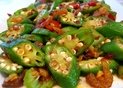 North Indian Cuisine
Information on the world famous North Indian Food with links to relevant recipes.
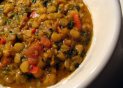 South Indian Cuisine
Articles, recipes and information about classic and modern South Indian food.
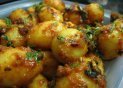 East Indian Cuisine
Information covering different aspects and varieties of East India food.
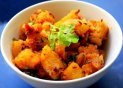 West Indian Cuisine
Loads of information and articles about West Indian cuisine with links to some of my favourite recipes.
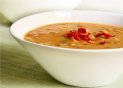 Goan Food
Some of the finest Indian food can be found in the Western Indian state of Goa, the tourist capital.
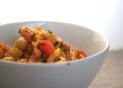 India food recipes
A huge collection of some of the finest Indian food recipes seperated into catagories: bread recipes, rice recipes, chicken recipes, vegetarian recipes etc.
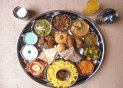 Eating out in Delhi
With some of the best restaurants in the world, Delhi is probably the greatest place to sample the best food from all over India
If you enjoyed this page about food in India and would like to contribute then please either leave a comment or feel free to get in touch. Also, sign up to our ezine for exciting articles, recipes and everything you love all about India!
Return to the All About India Homepage
Navigation
Recent Articles
-
Difficulty in Life
Our life is full of difficulty Just have to know how to deal with Understand it Accept it Make way for it Make the best out of it -
Ancient India
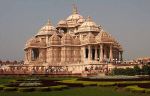 A modern look at Ancient India delves deep into India's past right back to the Indus valley civilisation and Looking deep into ancinet indian religion, culture and history
New! Comments
Have your say about what you just read! Leave me a comment in the box below.